
The trucking industry is evolving rapidly as new truck technology continues to reshape how freight is moved, maintained, and managed. Understanding each emerging trend is essential for preparing your fleet and business for the future of the trucking industry.
Heavy Truck Trends & Technology in 2026 and Beyond
The trucking industry is entering a period of rapid transformation. Advances in technology, evolving regulations, and increasing pressure to enhance efficiency and sustainability are transforming the design, operation, and maintenance of heavy trucks. For fleets and drivers moving freight through Ontario and beyond, understanding what lies ahead is essential for staying competitive and road-ready.
As we look toward 2026 and the future of the trucking industry, several key trends are emerging that will significantly influence heavy truck operations.
Electric Trucks: From Pilot Projects to Practical Use
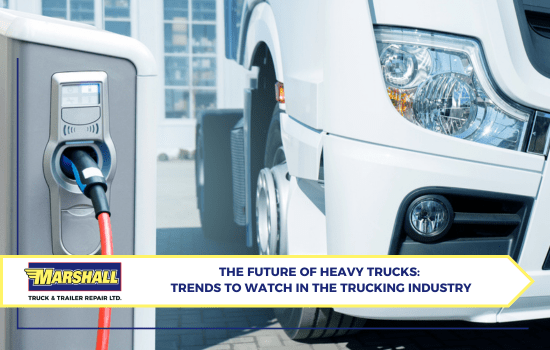
Electric heavy trucks are no longer a distant concept; they are steadily becoming part of real-world fleets. While long-haul electric trucking still faces challenges, such as charging infrastructure and range limitations, adoption is accelerating in specific use cases.
What’s Changing:
-
Increased use of electric trucks for regional, urban, and short-haul routes (Source: ChargedFleet)
-
Improved battery range and charging efficiency (Source: Wikipedia - Tesla Semi)
-
Greater investment in charging infrastructure at depots and key transportation corridors (Source: Wikipedia - Greenlane EV charging corridor)
For fleets operating in and around Ontario’s urban centers, electric trucks offer quieter operation, reduced emissions, and lower long-term fuel and maintenance costs. As technology continues to mature, electric trucks are expected to play a growing role in mixed fleets rather than fully replacing diesel in the near term.
Automation and Advanced Driver Assistance Systems (ADAS)
Automation is reshaping trucking incrementally rather than all at once. While fully autonomous heavy trucks are still years away from widespread deployment, advanced driver assistance technologies are already improving safety and efficiency.
Technologies Gaining Momentum:
-
Adaptive cruise control and lane-keeping assist (Source: TTNews)
-
Automatic emergency braking and collision avoidance systems (Source: TTNews)
-
Predictive analytics for braking and acceleration (Source: FleetMaintenance)
These systems help reduce driver fatigue, minimize accidents, and improve fuel efficiency. For drivers, automation is not about replacement; it is about support. Fleets that invest in ADAS are often rewarded with improved safety records and lower insurance risk.
Connected Trucks and Smart Diagnostics
Heavy trucks are becoming rolling data centers. Connected vehicle technology allows real-time monitoring of performance, driver behaviour, and mechanical health. (Source: Heavy Duty Trucking)
Benefits of Connected Technology:
-
Predictive maintenance alerts before breakdowns occur
-
Improved compliance reporting and inspection readiness
-
Reduced downtime through early issue detection
For operators and repair facilities alike, this shift enables more proactive service planning. Routine maintenance becomes smarter, more efficient, and less disruptive to delivery schedules.
Alternative Fuels and Efficiency Improvements
In addition to electrification, alternative fuels continue to gain traction as truck drivers and fleets explore ways to reduce emissions without overhauling infrastructure.
Fuel Trends to Watch:
-
Renewable diesel and biodiesel blends (Source: U.S. Department of Energy)
-
Hydrogen fuel cell development for long-haul applications (Source: Cornell University)
-
Continued improvements in diesel engine efficiency (Source: Clean Trucking)
Many fleets are taking a hybrid approach, combining cleaner fuels with aerodynamic upgrades and idle-reduction technology to improve overall efficiency.
The Growing Importance of Skilled Maintenance & Repair
As trucks become more technologically advanced, the need for specialized maintenance and diagnostics continues to grow. Modern heavy trucks require technicians trained in electronics, software systems, and advanced mechanical components.
Facilities like Marshall Truck & Trailer Repair play a critical role in supporting this evolution, ensuring trucks remain compliant, safe, and fully operational as technology advances. Preventative maintenance and expert inspections will become even more valuable as systems become more complex.
Looking Ahead
The future of heavy trucks is defined by innovation, efficiency, and smarter operations, not overnight change. Electric vehicles, automation, connectivity, and cleaner fuels will continue to shape the trucking industry through 2026 and beyond, creating new opportunities for fleets and drivers who are prepared.