
You're driving your heavy truck down the highway when suddenly a warning light appears on your dashboard. Do you keep driving to your next stop, or is it time to pull over? Understanding what your truck's dashboard warning lights mean can help you recognize when a repair is needed, prevent costly engine damage, avoid unexpected breakdowns, and make safer decisions that prioritize road safety.
Heavy Truck Dashboard Warning Lights: Know When to Stop and When to Seek Repairs
Modern heavy trucks are equipped with advanced monitoring systems designed to alert drivers to potential mechanical, electrical, and safety concerns. While some dashboard warning lights indicate maintenance issues that require professional attention, others signal serious problems that demand immediate action. Recognizing the difference and responding appropriately can help protect your truck, reduce downtime, and prevent minor issues from becoming major repairs.
1. Red Warning Lights: When You Need to Pull Over Immediately
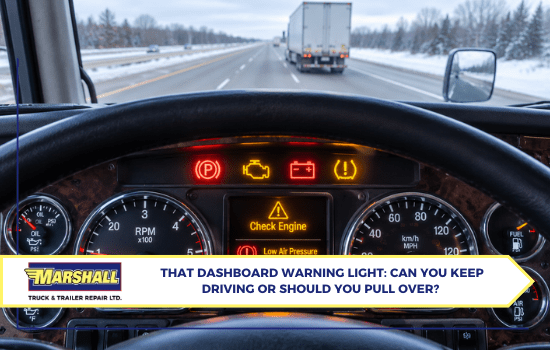
Red warning lights, particularly those indicating low engine oil pressure, engine overheating, or critically low air brake pressure, can signal serious mechanical or safety concerns. Continuing to drive with insufficient oil pressure or excessive engine temperatures can cause severe engine damage, while low air pressure can compromise your truck's braking system. If a critical warning appears, safely pull over as soon as possible, follow your manufacturer's instructions, and shut down the engine when directed or when necessary to prevent damage. Never continue driving with a critical warning simply to reach your next delivery or service location.
2. Yellow or Amber Warning Lights: Don't Ignore the Warning Signs
Yellow or amber dashboard lights typically indicate a condition requiring attention, although they do not always mean you must stop immediately. Common examples include check engine lights, diesel particulate filter (DPF) warnings, and certain emissions-system alerts, which may indicate problems affecting engine performance or emissions compliance. Some warnings may require a specific driver response, such as an approved regeneration procedure, while others may indicate a developing mechanical problem that requires professional diagnostics. Always consult your truck's operator manual, as warning severity and required actions vary by manufacturer, and certain amber warnings can escalate into serious operating restrictions.
3. Brake, ABS, and Tire Warnings: Safety Comes First
Warnings involving your truck's braking system, anti-lock braking system (ABS), or tire pressure should never be overlooked. An ABS warning may indicate that anti-lock functionality is unavailable even if conventional braking remains operational, while a low-air-pressure warning can indicate an immediate safety risk requiring the truck to be stopped. Tire pressure monitoring alerts may signal underinflation, a rapid pressure loss, or another condition that could contribute to tire failure. If braking performance changes, air pressure becomes unsafe, or a tire appears to be failing, stop in a safe location and arrange for professional assistance before continuing.
4. When Professional Truck Diagnostics Are Necessary
A dashboard warning light identifies a potential problem, but it doesn't always reveal the underlying cause. Modern heavy trucks use electronic control modules and diagnostic trouble codes to monitor engine performance, emissions systems, transmissions, and other critical components. Professional diagnostic equipment allows trained technicians to interpret fault codes, perform additional testing, and determine whether a sensor, electrical connection, or mechanical component requires attention. At Marshall Truck & Trailer Repair, our experienced technicians provide heavy truck diagnostics and repairs for all makes and models, helping drivers address problems before they lead to more extensive damage or downtime.